News

Extended Reality and Human Computer Interaction for Medicine, Cultural…

The research activity in medicine and surgery is focused on the use of Virtual and Augmented Reality technologies to support surgeons in the diagnosis, the preoperative planning and the intraoperative phase in minimally invasive surgery. In addition, the use of touchless interaction is being investigated to enable a simple and intuitive fruition of specific patient’s data in those environments, such as the operative theatre, where any contact with the devices should be avoided to provide aseptic interactions between computer systems and medical staff.
Another line of research concerns the use of virtual, augmented and mixed reality for the treatment of children with ADHD through game-oriented activities (serious games).
Software applications are being designed, also based on mixed reality environments and serious games, for monitoring and rehabilitating patients with motor problems using touchless devices for detecting postures and arm and hand movements.
The research activity in Cultural Heritage is investigating the use of Virtual and Augmented Reality technologies to recreate historic sites for educational purposes and showcase features at visitor centres. In particular, Virtual Reality allows opening up real places normally not accessible to people by providing a realistic computer-generated navigation and sense of presence.
Spatial augmented reality, also known as video mapping, turns a building into a display surface for video projection: it uses audio-visual language to tell the story of a building and its surroundings through animations and sounds.

News

Computer screen photo-assisted technique: a low-cost interface for colorimetric…

Chemical sensors with an optical response play a key role in industrial, environmental, and clinical fields due to their low-cost, miniaturization capability, and great flexibility. Among the various typologies of optical sensors, colorimetric sensors are desirable because they can identify target substances by associating the concentration with a color change, thereby ensuring an easily measurable analytical response. Colorimetric sensors are devices whose fluorescence emission or absorption properties in the visible spectrum change upon interaction with specific targets. The operating principle of these sensors is relatively simple: they are used in combination with a light source, with a set wavelength, and a detector. The light source illuminates the sensor, and the changes in the spectral properties of the reflected/transmitted radiation or the fluorescence emission are evaluated by using the detector.

The Computer Screen Photo-assisted Technique (CSPT) can be employed for a proper evaluation of the response of this kind of sensors. It is a characterization technique based on a simple but effective idea: it exploits the possibility of using parts of a computer screen as a programmable light source and a camera to record and analyze changes in the spectrum produced by the sample. In such context, the information on the wavelength of the light source (i.e., the color of the employed irradiation) is substitute with an RGB value (i.e., Red, Green and Blue values of a computer screen). This technique aims to create a device capable of evaluating the response of colorimetric sensors by using mainly commercially available devices. Usually, an LCD acts as a light source, and a conventional camera (e.g., a webcam) plays the role of a detector. The light from the LCD is reflected (or transmitted) by the chemical sensor, and the camera detects it.

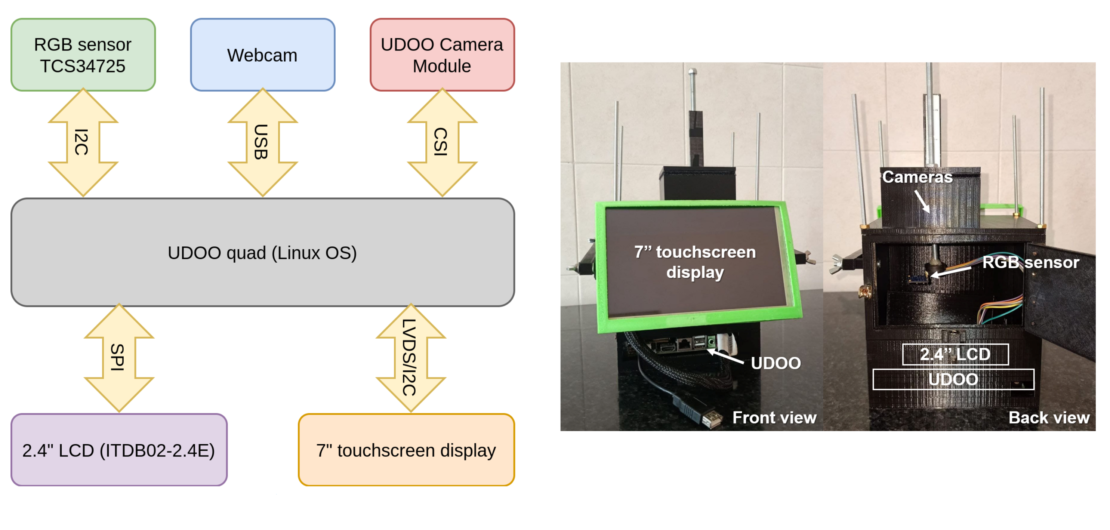
The a group from the University of Messina, headed by Prof. Nicola Donato (Res4Net member), in collaboration with the ICAR-CNR of Palermo (Italy), developed a compact and low-cost measurement system based on CSPT, able to evaluate spectral information of both reflected and transmitted light from colorimetric sensors. The proposed system uses low-cost components, broadly available on the market and it includes a single-board computer, with a 7-inch touch screen display. The resulted system is powerful, versatile, and compact: able to be employed in on-field applications. A block diagram and a picture of the developed device are shown in the figure.

The developed device supports multiple colorimetric sensors and can be used for in-field applications such as low-cost detection of contaminants (Fe-ions and others, especially highly toxic heavy metals) present in wastewater and used as tracers of chemical contamination.


A more detailed description of the developed prototype can be found here

News

Low power sensor networks and embedded sensing systems

Development of novel sensors, sensor networks and embedded sensing systems improving the condition monitoring system capabilities especially through the monitoring of gas composition.
Development of novel sensors and sensing strategies design for the enhancement of the condition monitoring system robustness, exploiting also the virtualization of redundancy through modeling.
Development of Minimum invasive sensing systems, exploiting low power technologies, low power wireless data transmission, energy harvesting.

News

Wearable brain–computer interface instrument for augmented reality-based inspection in…

The proposed wearable monitoring system for inspection in the framework of Industry 4.0 is based on Brain-Computer Interface (BCI) and Augmented Reality (AR) integration. AR offers a new communication channel, capable of enhancing human-machine interactions. BCI can be particularly effective to interact with an AR headset, essentially working as a “thinking mouse” and allowing hands-free control of the system, so that the operator can simultaneously carry out other tasks.

News

A virtual platform for real-time performance analysis of EM…

Background: Electromagnetic Tracking Systems (EMTSs) are widely used in surgical navigation, allowing to improve the outcome of diagnosis and surgical interventions, by providing the surgeon with intraoperative real-time position of surgical instruments during medical procedures. In particular, a very small magnetic sensor, which measures the magnetic field produced by a known field generator (FG), is inserted into the surgical instrument (e.g., a flexible instrument such as an endoscope or a needle), and the position of the sensor is estimated by means of a suitable algorithm.

Objectives: The main limitation of EM technology is the short tracking distance, which is generally no longer than 0.5 m from the FG in current commercial systems, due to the reduced amplitude of the magnetic field with distance, and the high sensitivity to EM interferences and magnetic field distortions, thus limiting tracking accuracy far from the FG. Many aspects affect system performance, and engineers and manufacturers should consider all of them, since also a small accuracy or distance increase is a valuable achievement in this field.

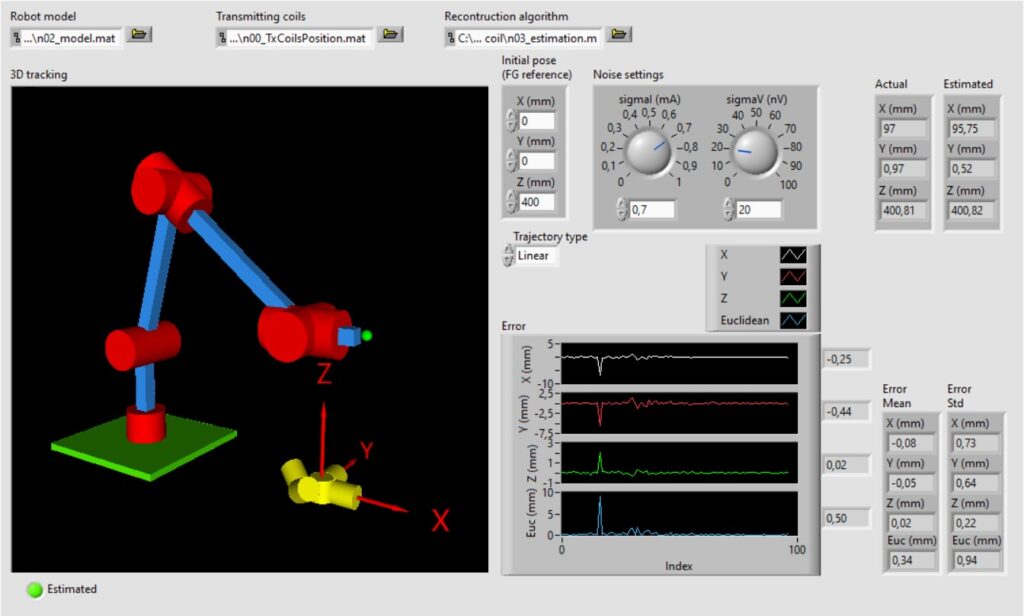
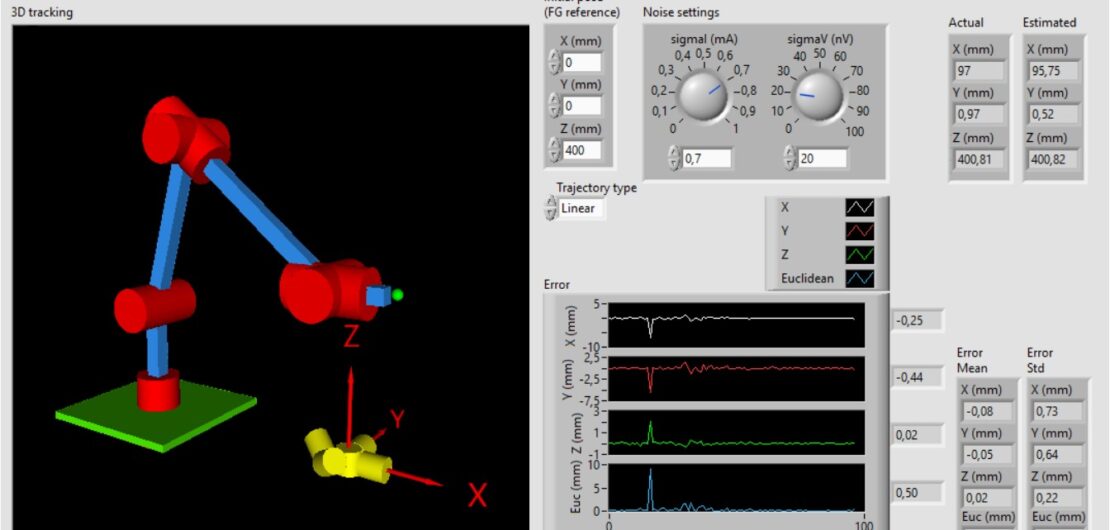
Methods: In this research, we propose a virtual platform for assessing the performance of EMTSs for surgical navigation, showing in real time how the various sources of error affect the accuracy of tracking distance estimation. The virtual platform is designed to be used in combination with a robot to move the sensor and provide accurate position references. The platform is composed of six main sections, and its functioning is illustrated in Fig. 1. The model of the EMTS if defined in an external file and imported into the platform, and the user defines the trajectory for sensor movement. Two different modalities can be performed: i) in the experimental mode, the platform connects to the DAQ device and the induced signal in the magnetic sensor is acquired as it is moved by the robot along the defined trajectory, ii) in the simulation mode, the signal of the magnetic sensor is simulated by employing a model of the magnetic field; in both cases, noise can be added to the signal. Finally, the position of the sensor is estimated by means of a suitable reconstruction algorithm, providing real-time 3D representation and error statistics.

Results: Simulations and experimental tests are performed to validate the proposed virtual platform in practical cases, showing its usefulness in assisting engineers during EMTS design and characterization, and by employing it to assess the performance of a real EMTS prototype (shown in Fig. 2), obtaining a mean Euclidean position error of about 2 mm at a distance of 600 mm from the FG, which is comparable with the ones obtained by simulations and suitable for many surgical procedures.

Conclusions: The platform provides a useful real-time tool to analyse EMTS components and field generator configurations, for a deeper understanding of EMTS technology, thus supporting engineers during system design and characterization.

References:[1] Ragolia, M. A., Attivissimo, F., Di Nisio, A., Lanzolla, A. M. L., & Scarpetta, M. (2021). “A virtual platform for real-time performance analysis of electromagnetic tracking systems for surgical navigation”. Acta IMEKO, 10(4), 103-110. doi:10.21014/acta_imeko.v10i4.1191.

[2] M. A. Ragolia, F. Attivissimo, A. Di Nisio, A. Maria Lucia Lanzolla and M. Scarpetta, “Reducing effect of magnetic field noise on sensor position estimation in surgical EM tracking,” 2021 IEEE International Symposium on Medical Measurements and Applications (MeMeA), Neuchâtel, Switzerland, 2021, pp. 1-6, doi: 10.1109/MeMeA52024.2021.9478723.

[3] M. A. Ragolia et al., “EM tracking system for surgical navigation”, research project; https://www.researchgate.net/project/EM-tracking-system-for-surgical-navigation

Virtual platform developed in LabVIEW, during the execution of a simulation. On the left: the model of the MELFA robot is shown during the movement; the green point is the position estimate provided by the algorithm, and FG reference system is shown in red. On the top: the noise settings section and the trajectory definition are shown. At the bottom: real-time statistics of position error are provided.
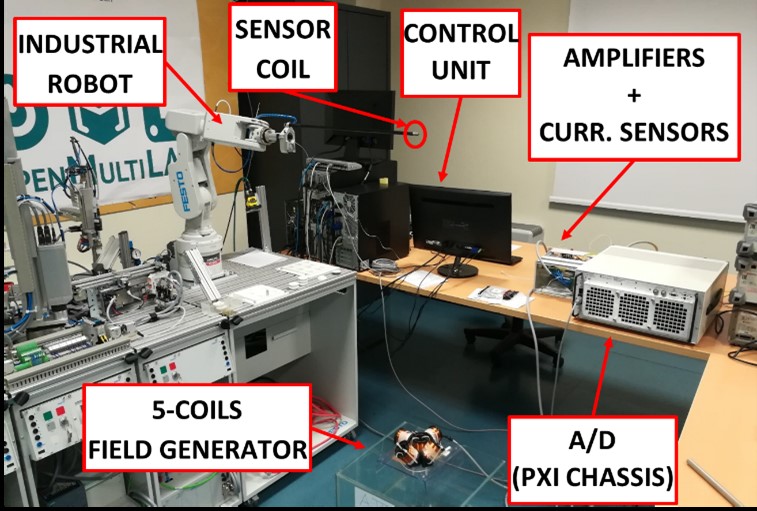
Experimental setup for system characterization. The developed prototype is composed of three main components: a Field Generator (FG), a Magnetic Sensor (MS) and a Control Unit (CU). The FG is composed of five transmitting coils, whose arrangement minimizes mutual inductances. Each coil is powered with a sinusoidal current at different frequencies (approximately from 1 to 5 kHz), thus generating an AC magnetic field. The whole magnetic flux generates an induced voltage on the MS, which is acquired, digitalized, and filtered by means of five band-pass filters thus obtaining five RMS voltage components, related to the different excitation frequencies. These components are used to estimate sensor position by means of a suitable reconstruction algorithm. The control software is developed in LabVIEW®, and the sensor is moved by means of an industrial robot (by Mitsubishi), which provides accurate position reference.
News

Important updates on the IEEE MetroXRAINE2022 conference

Save the dates!


Abstract Submission Deadline

  • March 18, 2022

Authors should prepare an Abstract (1 – 2 pages) that clearly indicates the originality of the contribution and the relevance of the work. The Abstract should include the title of the paper, names and affiliations of the authors, an abstract, keywords, an introduction describing the nature of the problem, a description of the contribution, the results achieved and their applicability.

Abstract Acceptance Notification

  • March 30, 2022

When the first review process has been completed, authors receive a notification of either acceptance or rejection of the submission. If the abstract has been accepted, the authors can prepare a full paper.

Full Paper Submission Deadline

  • May 10, 2022

The format for the full paper is identical to the format for the abstract except for the number of pages: the full paper has a required minimum length of five (5) pages and a maximum of six (6) pages.

Full Paper Acceptance Notification

  • June 10, 2022

Full Papers will be reviewed by the Technical Program Committee.

Final Paper Submission Deadline

  • July 30, 2022

Authors of accepted full papers must submit the final paper version according to the deadline, register for the workshop, and attend to present their papers. The maximum length for final papers is 6 pages.

News

Metrosea 2022 – International workshop on metrology for the…

The sea has always represented for man an essential vital resource. Since history origins, it has served as a fundamental element of the geopolitical landscape. It allows people to travel from one country to another and it is still intensively used for goods transportation. Moreover, the sea represents an extraordinary reserve of water and food for all the living beings of the earth. Therefore, nations must exercise common sense and responsibilities concerning the preservation of seas and oceans. Sea health is crucial for the survival of all human beings and environmental pollution and global warming could certainly affect negatively its condition. In such a context, MetroSea represents, since its first edition, an international meeting in which recent advances in the field of instrumentation and measurement are discussed, with the aim to increase the knowledge in the protection and preservation of the sea. The MetroSea workshop involves every year national and international experts from both institutions and academia in a discussion in the field of metrology for the marine environment.
The MetroSea 2022 edition will be held in Milazzo (Italy, Messina) from 3rd to 5th October 2022 and will be organized by the University of Messina. The general chairs are Prof. Pasquale Daponte from University of Sannio, Prof. Nicola Donato (Res4Net member) and Prof. Giovanni Randazzo, both from University of Messina. The workshop topics span from sensors and monitoring systems for the sea, to measurements for coastal and marine geology, passing through underwater ones. Authors are invited to contribute by submitting an extended abstract based on their original scientific research by May 31, 2022.
More information on the workshop topics and deadlines can be found on the official website.

News

Nuclear Fusion – Unitus

In the Nuclear Fusion research field, EUROfusion is the European consortium for the Development of Fusion Energy, born in 2014 from the agreement to strengthen European collaboration on fusion research. Part of the EUROfusion programme, important to prepare the future ITER (International Thermonuclear Experimental Reactor) operations, is JET (Joint European Torus).
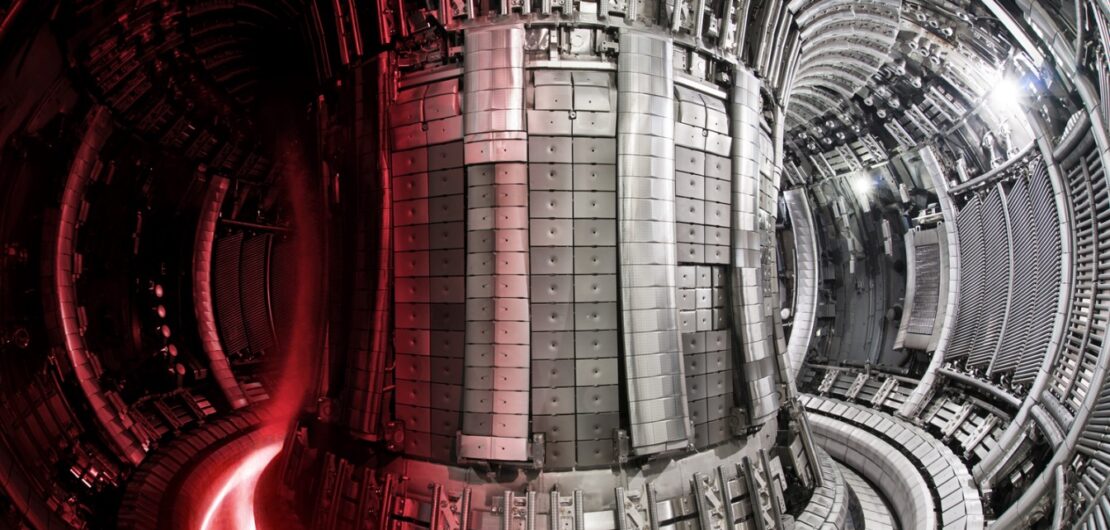
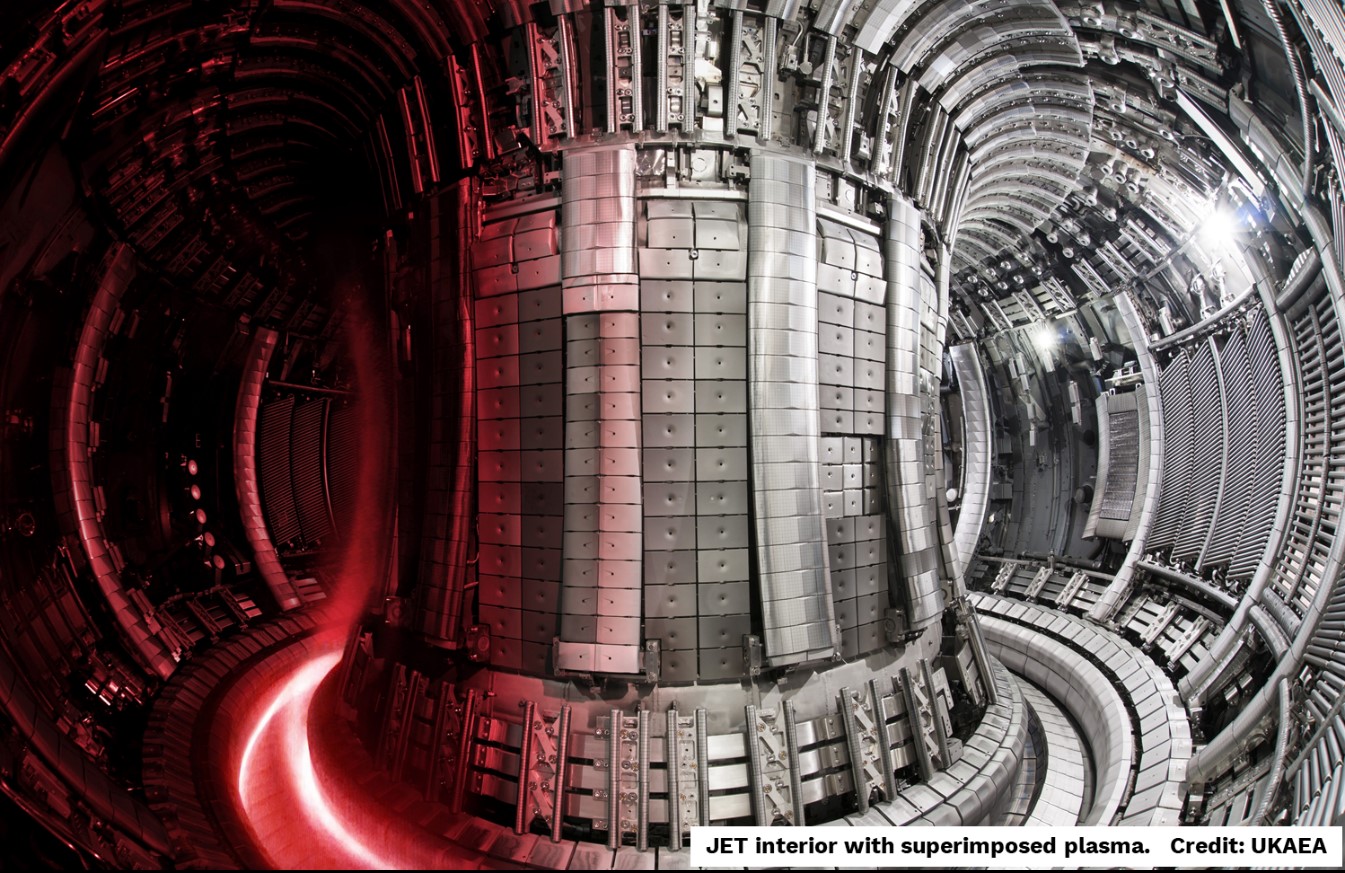
JET is a Tokamak, a nuclear fusion reactor with magnetic confinement, based at Culham Centre for Fusion Energy (CCFE), in Oxford, UK. It is the only tokamak in the world that can operate using the ideal fusion fuel: a mix of hydrogen isotopes, Deuterium and Tritium. The 2021 JET campaign with Deuterium and Tritium, designed also by EUROfusion, had different goals, and the most important was: “Demonstrate fusion power from 10 up to 15 Megawatts sustained for five seconds” breaking the record reached in 1997.
JET’s first world record, in 1997, concerned the generation of ~4.5 Megawatts of fusion power for 5 seconds by a sustained plasma, producing a total fusion energy of 22 Megajoules.
At the end of the 2021 experimental campaign, on December, JET’s researchers broke the previous record, reaching an important achievement, result of over 20 years of research, in which also UNITUS professors and researchers gave their contribution.
10 Megawatts of fusion power were generated by a sustaining steady D-T plasma for 5 seconds. The total amount of fusion energy released by the fusion process was 59 Megajoules, more than double of the previous case.
The record was announced on February 09, 2022. In this occasion the UKAEA’s CEO (UK Atomic Energy Authority that hosts JET) Prof. Ian Chapman said: “These landmark results have taken us a huge step closer to conquering one of the biggest scientific and engineering challenges of them all. […] It is clear we must make significant changes to address the effects of climate change, and fusion offers so much potential. We are building the knowledge and developing the new technology required to deliver a low-carbon, sustainable source of baseload energy that helps protect the planet for future generations. Our world needs fusion energy.”
This is an important demonstration of how the cooperation and collaboration can lead to beneficial results for all humanity.
In this video (YouTube link), published by UK Government channel, is present the announcement of the JET Deuterium-Tritium results.

For other information, please visit:
EUROfusion Article

Nature Article 

Science Article

News

The new frontiers of measurement

#forensicscience #forensicmetrology #politecnicodimilano #expertwitnesses #engineering #forensic

Technical issues have been playing a relevant role in forensic practice and represent an important aid to those who administer Justice. The typical engineering methods represent a large part of the forensic sciences, and technical experts’ role has steadily gained importance in the last decades.
Justice has always sought certain means to assess the factual truth to render fair verdicts. To the investigators and triers of facts, science and techniques appear like the optimal tools to provide a certain representation of facts, based on scientific and irrefutable data.
Unfortunately, science and technique have their own limitations and they can only provide limited information on the events they model. This means that every decision taken based on a scientific judgment of facts has an intrinsic risk of being not fully correct, and it is important, from both the technical and ethical points of view, to consider such limitations.
The objective of this course is to frame the role of the technical experts inside the judicial proceedings and explain how the implicit doubts in the result of every piece of evidence collected through scientific and technical activities shall be quantified and presented to the triers of facts to explain them the risk of a wrong decision.
In this respect, forensic metrology is the branch of forensic science capable of providing a pondered answer to these issues not hiding the important, implicit limits of every technical assessment of the facts to the triers of facts, thus avoiding ethical and penal implications and will be covered by this course.